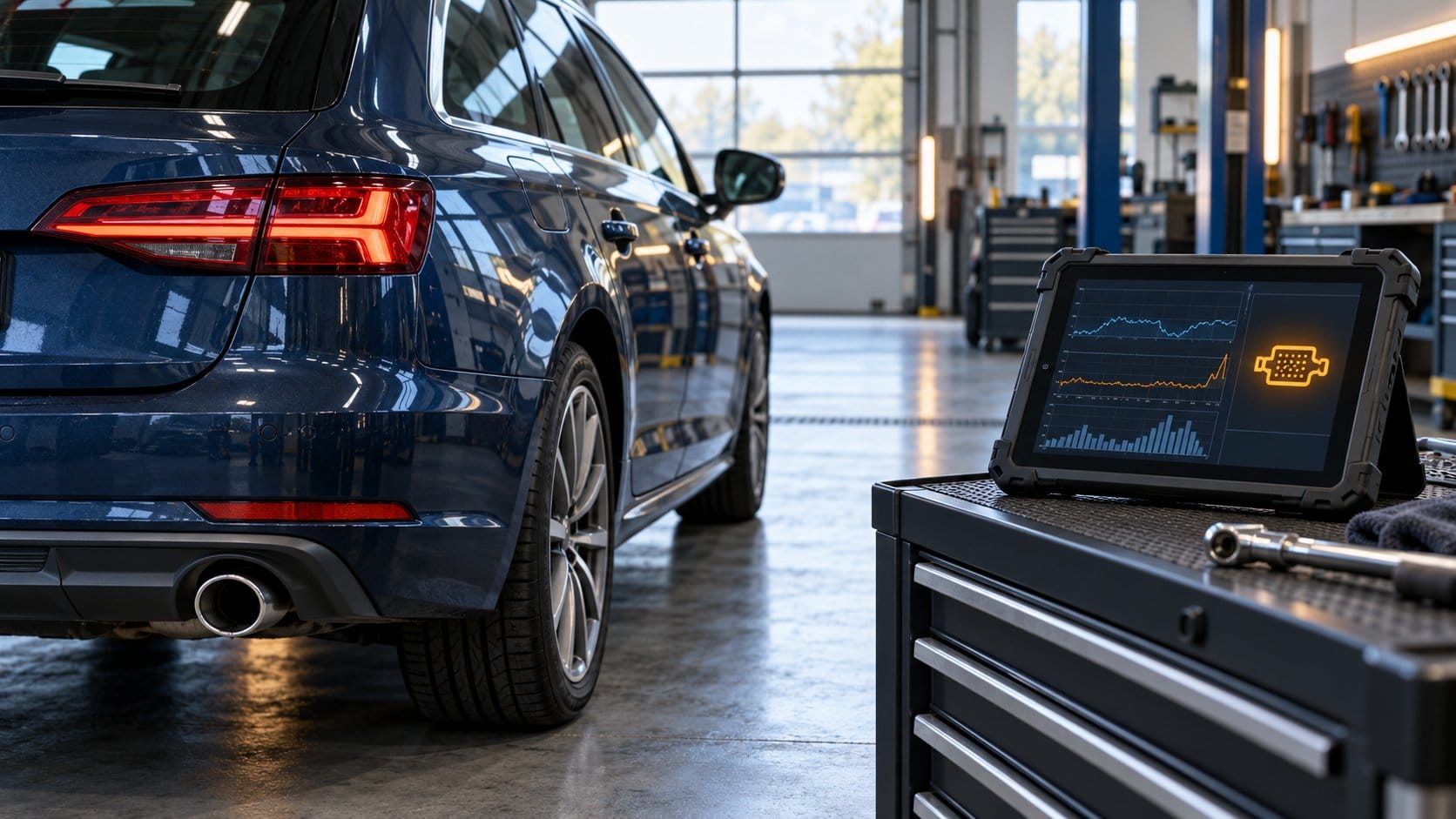
A diesel particulate filter warning light is a request for diagnosis, not automatic proof that the filter needs replacement or an immediate forced regeneration. The same symbol can appear after repeated short trips, but it can also accompany a pressure-sensor fault, an engine problem that creates excess soot, or a filter whose non-combustible ash load is already high. The safest response begins with the vehicle handbook and fault data.
This guide explains a practical DPF warning light diagnosis sequence. It does not replace the model-specific procedure or workshop information for your vehicle. If the car has several warning lights, reduced power, overheating, unusual noises, or a message telling you to stop, avoid experimenting and arrange professional help.
What the DPF warning light actually tells you
A DPF traps soot from diesel exhaust. The engine control unit estimates filter loading from operating history and sensor inputs. As HELLA explains in its exhaust aftertreatment overview, a differential pressure sensor measures the pressure change across the filter, and the ECU uses that information when calculating regeneration.
Regeneration burns soot under suitable conditions. Ash is different: it is the non-combustible residue left by oil additives and other material. HELLA notes that regeneration does not remove ash. A filter with excessive ash may need professional cleaning or replacement even if a regeneration completes. That distinction is one reason the warning lamp alone cannot select the repair.
Diagnose before attempting regeneration
1. Record the warnings and symptoms
Note every illuminated symbol, the dashboard message, when it appeared, and whether the engine has lost power. Photographing the display can preserve useful detail. Then consult the owner’s manual for that exact model and year. Manufacturer responses vary. For example, Volkswagen’s UK guidance gives a specific driving procedure for one amber DPF lamp, but directs drivers to assistance when multiple warning lamps appear. That is a Volkswagen example, not a universal recipe.
2. Scan all relevant control modules
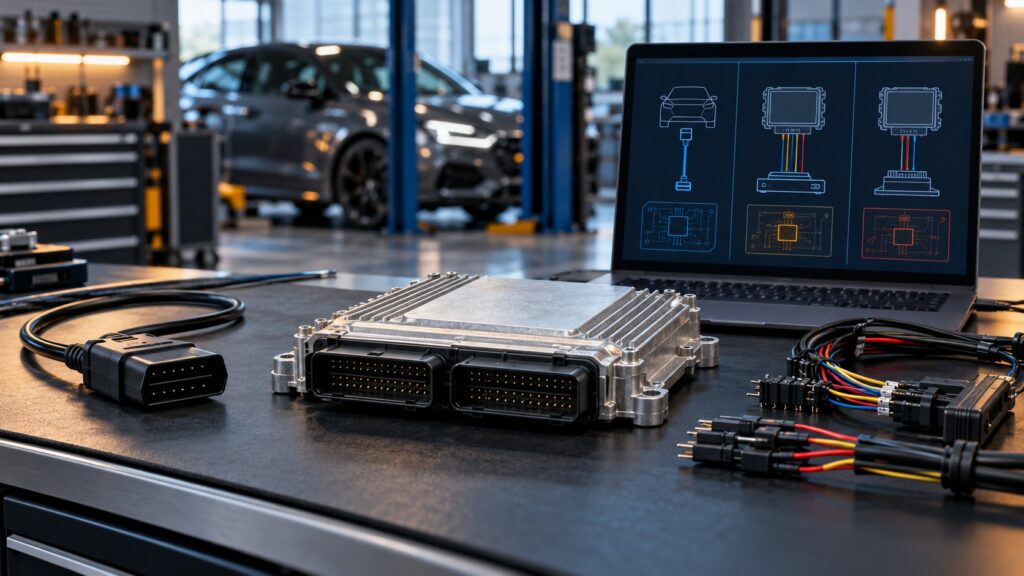
Read and save diagnostic trouble codes before clearing anything. A basic generic reader may reveal an emissions code, but DPF diagnosis often needs manufacturer-level access to the engine system. Record freeze-frame information where available. Codes relating to differential pressure, exhaust temperature, airflow, boost, EGR operation, fuel injection, or glow systems may explain why normal regeneration was interrupted or inhibited.
A code is a test direction, not a parts order. HELLA’s Touareg regeneration case study shows that a differential-pressure sensor and its hoses must be checked when regeneration fails. Replacing or regenerating the filter without testing that measurement circuit can leave the original fault in place.
3. Compare live data with workshop specifications
A technician may review differential pressure at specified engine speeds, exhaust temperature sensors, calculated soot and ash values, distance since the last successful regeneration, and regeneration status. The numbers are meaningful only against the vehicle maker’s test conditions and limits. An implausible sensor reading can make a healthy filter appear loaded; high real backpressure can point toward a restricted filter. Never infer either condition from one unsupported value.
4. Look for the reason soot accumulated
| Possible cause | Useful clue | Why regeneration alone may fail |
|---|---|---|
| Repeated interrupted regeneration | Mostly short, low-load journeys | The required operating conditions were not sustained. |
| Pressure sensor or hose fault | Implausible pressure data or related codes | The ECU cannot assess filter loading reliably. |
| Temperature or engine-management fault | Related codes, abnormal temperatures, poor running | The ECU may inhibit regeneration, or the engine may produce excessive soot. |
| High ash load or physical restriction | High restriction despite previous successful regeneration | Regeneration burns soot but does not remove ash. |
| Vehicle-specific condition not met | Handbook or scan tool reports a blocked prerequisite | Fuel level and other safety conditions can differ by model. |
Correct the cause before repeating the same procedure. If another engine fault is present, start with a structured check-engine-light diagnosis and preserve the original code data.
When an owner drive may be appropriate
Follow an owner-level regeneration drive only when the handbook explicitly allows it for the current warning state. Use the speed, duration, gear, engine-speed, fuel-level, and stopping instructions given for the exact vehicle. Do not copy a procedure from another brand or model.
Regeneration raises exhaust temperature substantially. HELLA’s technical guidance describes active regeneration as a higher-temperature process than normal passive regeneration. Follow every location and safety instruction in the owner’s manual, and keep the vehicle away from combustible material. If the approved drive does not clear the warning, do not keep repeating it. The vehicle needs diagnostic testing.
When forced regeneration belongs in a workshop
A forced or service regeneration is an active command made with compatible diagnostic equipment. HELLA describes it as a workshop procedure performed with a diagnostic device according to the manufacturer’s instructions. Before starting, a technician should confirm that the relevant faults are resolved, the filter loading is within the permitted range, required sensor readings are plausible, and every maker-defined safety condition is satisfied.
The current XTOOL D5 listing includes DPF/GPF regeneration among its service functions. The listing also states that function availability depends on vehicle make, model, and year. Confirm coverage for the exact vehicle before buying or attempting the procedure; the presence of a menu item does not establish that regeneration is safe or suitable for the fault.
DPF warning light diagnosis: quick questions
Can I clear the DPF light with an OBD2 scanner?
Clearing a code may temporarily remove a message, but it does not remove soot, ash, or a sensor fault. Save the codes and freeze-frame data first, diagnose the cause, and use only the approved repair procedure.
Does the light mean the DPF is blocked?
It can indicate excessive loading, but the warning may also result from faulty pressure or temperature information or another engine-management issue. Test data is needed before condemning the filter.
Should I keep driving until regeneration starts?
Use the handbook’s instructions for the exact warning state. Multiple warning lights, reduced power, overheating, or a failed approved drive justify professional diagnosis rather than continued attempts.
A sound DPF diagnosis preserves evidence, tests the sensors and engine conditions that control regeneration, and distinguishes soot from ash. That sequence helps prevent an unnecessary filter replacement and, just as importantly, avoids commanding a high-temperature procedure when the vehicle has not met the manufacturer’s conditions.