

If your engine is shaking at idle, hesitating under acceleration, or your Check Engine Light has turned on, you’re likely dealing with a misfire. Misfires happen on petrol, diesel, and hybrid engines—and the expensive mistake is replacing parts before confirming the real cause. This guide shows you how to diagnose P0300 (random misfire) and P0301-P0306 (cylinder-specific misfires) using OBD2 diagnostics and live data.
What You Need to Know First
Safety warning: If the Check Engine Light is flashing, stop driving immediately. A severe misfire can overheat and damage your catalytic converter. If the car is shaking violently, smells like raw fuel, or lacks power badly, treat it as urgent.
Common Misfire Symptoms
- Rough idle / engine shaking
- Loss of power and hesitation during acceleration
- Poor fuel economy
- Smell of fuel from the exhaust
- Engine light on or flashing
- Misfire only when cold, only when hot, or only under load
Tools You’ll Need
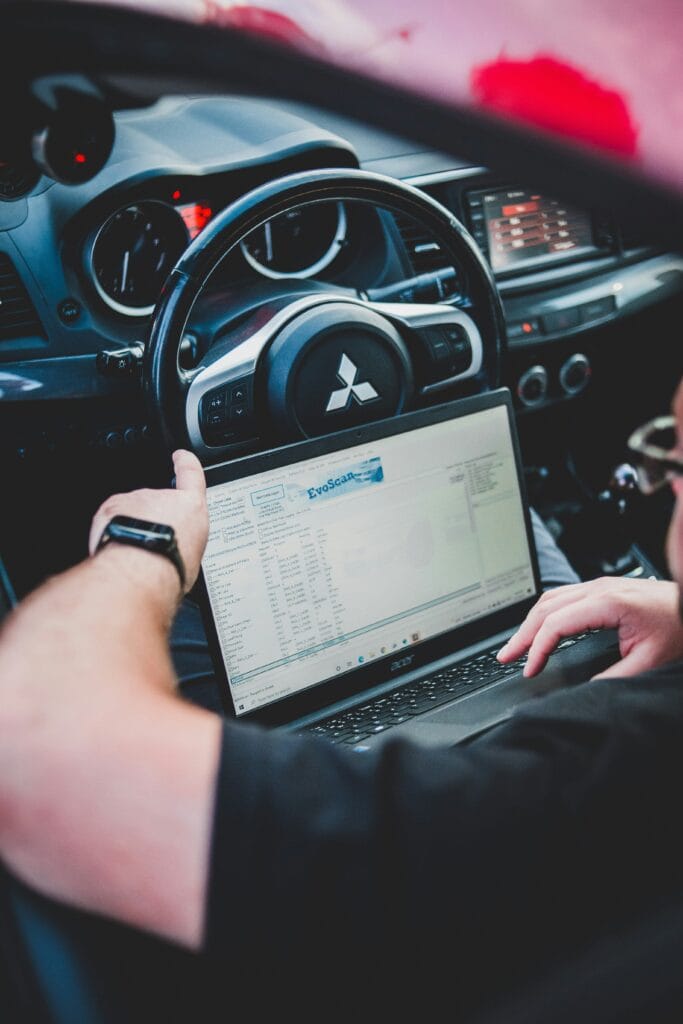
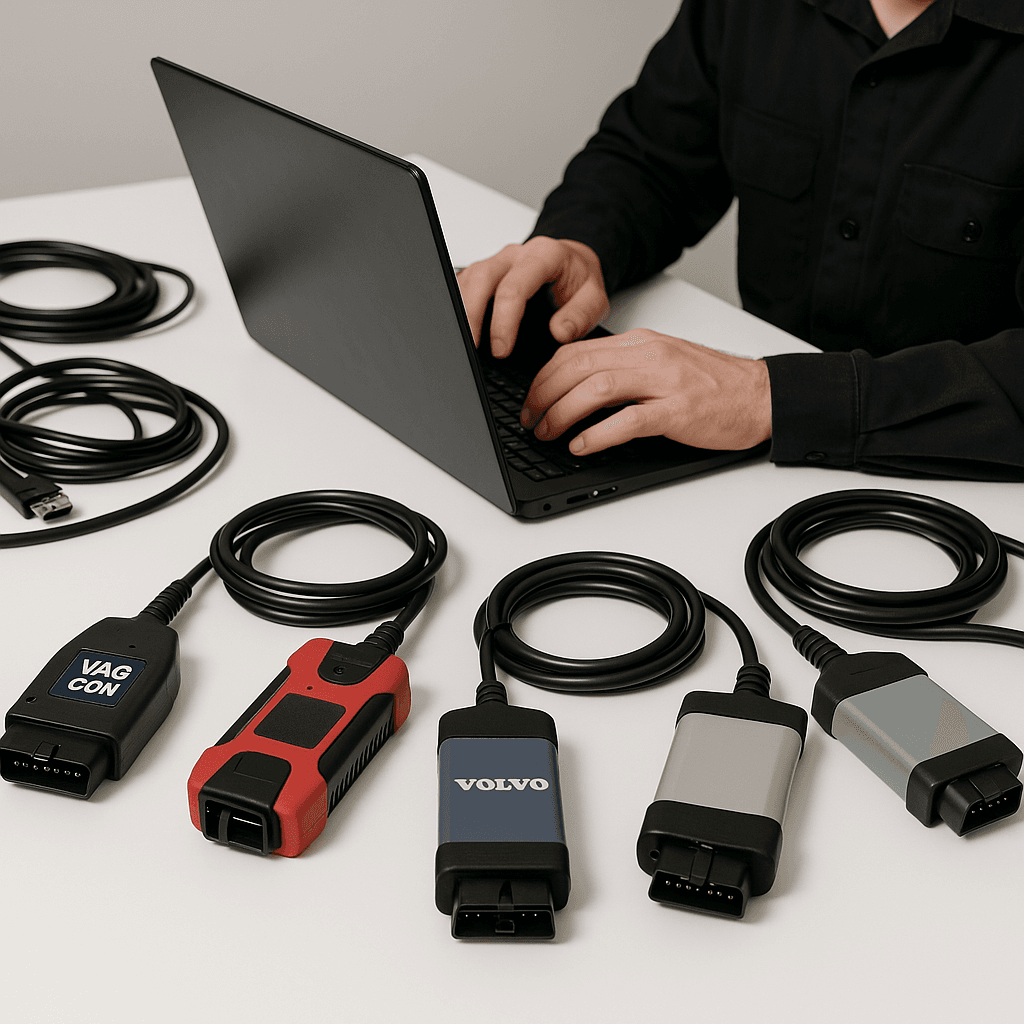
You can read basic codes with any OBD2 adapter, but proper misfire diagnosis requires live data access. Here are the best options from Speedxperts:
For entry-level DIYers: Vgate iCar Pro 2S provides wireless Bluetooth diagnostics and basic live data across all brands.
For serious diagnostics: Delfi DS150e Premium (1PCB) offers multi-brand professional-grade live data, misfire counters per cylinder, and fuel trim graphing—essential for complex misfire cases.
For mechanics: Wurt Wow Snoper Premium of Multidiag Pro Premium 1PCB both provide deep module access and advanced diagnostics at workshop level.
Step 1: Read Codes and Freeze Frame Data
Plug in your scanner and record all stored and pending codes. Pay special attention to freeze frame data—the vehicle conditions when the fault occurred:
- RPM: Did misfire happen at idle (1,000 rpm) or under load (3,500 rpm)?
- Coolant temp: Cold start vs warm engine?
- Engine load: Light or heavy?
- Fuel trims: High positive, high negative, or normal?
Why this matters: A misfire at idle (vacuum leak, plugs, coils) requires different diagnostics than a misfire under load (fuel delivery, ignition breakdown, boost leaks).
Step 2: Identify Misfire Type
P0301-P0306 = Specific cylinder affected (diagnosis is faster)
P0300 = Random/multiple cylinders (could be ignition, fuel, vacuum, or sensor issue)
Tip: Even with P0300, many professional tools show misfire counters per cylinder in live data. If available, use that to identify which cylinder(s) are affected.
Step 3: Use Live Data to Choose Your Diagnostic Path
Open live data and check these first:
Fuel Trims (STFT/LTFT)
- High positive trims (+10% to +25%): Engine is adding extra fuel = often vacuum leak, unmetered air, low fuel pressure, or MAF sensor issue
- High negative trims (-10% to -25%): Engine is removing fuel = often leaking injector, high fuel pressure, or EVAP issues
Engine Coolant Temperature (ECT)
A bad temp reading can mess with fueling and cause rough running, especially when cold.
MAF/MAP and Calculated Load
Unstable readings hint at intake leaks, dirty MAF, or sensor faults.
Step 4: Single-Cylinder Misfire (P0301-P0306)
This is the most cost-effective diagnostic path:
4.1 Start with ignition (most common + cheapest fix):
- Inspect spark plug: condition, gap, oil fouling, or cracks
- Swap coil from misfiring cylinder to a different cylinder
- Clear codes, drive, and re-scan
- If misfire code moves to the new cylinder, you found the culprit (coil or boot)
4.2 If ignition checks out, test fueling:
- Listen for injector clicking (basic check)
- Check live data: fuel injector pulse should fire during crank
- Monitor fuel pressure (should be 2.5–4.0 bar on most cars)
4.3 Consider mechanical issues:
- Compression problem (burned valve, ring blow-by)
- Vacuum leak at that intake runner
- Head gasket issue (rare but possible)
Step 5: Random Misfire (P0300)
Random misfires affect multiple cylinders, so look for system-wide issues:
Vacuum Leak (very common)
- Rough idle, misfire at low load
- High fuel trims at idle, improve at 2,500 rpm
- Check PCV hoses, intake boot, manifold gasket, brake booster line
Fuel Delivery Issues
- Misfire under load / acceleration
- Often lean codes present
- Check fuel pump pressure, filter condition, regulator
Ignition Breakdown Under Load
- Coils/plugs look fine but fail under cylinder pressure
- Worse in damp weather
- Consider carbon buildup on plugs
Sensor-Driven Fueling Errors
- If MAF readings are unreliable, ECU calculates wrong fueling
- Monitor MAF g/s against expected values for RPM
Step 6: After Repair—Verify the Fix
- Clear codes
- Drive through the conditions that caused the original misfire (cold start, idle, acceleration)
- Re-scan and monitor live data for misfire counts
- Verify fuel trims return to normal range
Cost Comparison
- Spark plugs: €20–€80
- Ignition coil: €50–€150
- Fuel injector: €100–€300
- Fuel pump: €300–€800
- Catalytic converter: €500–€1,500
Diagnostic tool investment (one-time): €57–€300
FAQ
Q: Can I drive with a P0300 code?
A: Only if the light is steady. Flashing = stop immediately. Steady light = safe to limp to a mechanic, but avoid highway speeds and hard acceleration.
Q: What’s the difference between STFT and LTFT?
A: STFT (Short-Term Fuel Trim) adjusts within seconds. LTFT (Long-Term Fuel Trim) learns over time. Both high = real fuel issue.
Q: Do I really need a professional scanner?
A: For basic code reading, no. But for misfire diagnosis with live data, yes—a €137 Delfi DS150e pays for itself on one diagnostic session.
Q: Can a bad oxygen sensor cause P0300?
A: Yes. O2 sensors provide feedback for fuel trim correction. Bad sensor = wrong fuel trim = misfires.
Next Steps
Start with Step 1: Read codes. If P0301-P0306, the diagnostic path is straightforward. If P0300, plan a methodical hunt for vacuum leaks and fuel issues. The Delfi DS150e Premium from Speedxperts will guide you through every step with live data graphing.
Browse all diagnostic tools to find the right scanner for your skill level.



 EN
EN DE
DE NL
NL FR
FR ES
ES FI
FI IT
IT NB
NB DA
DA SV
SV